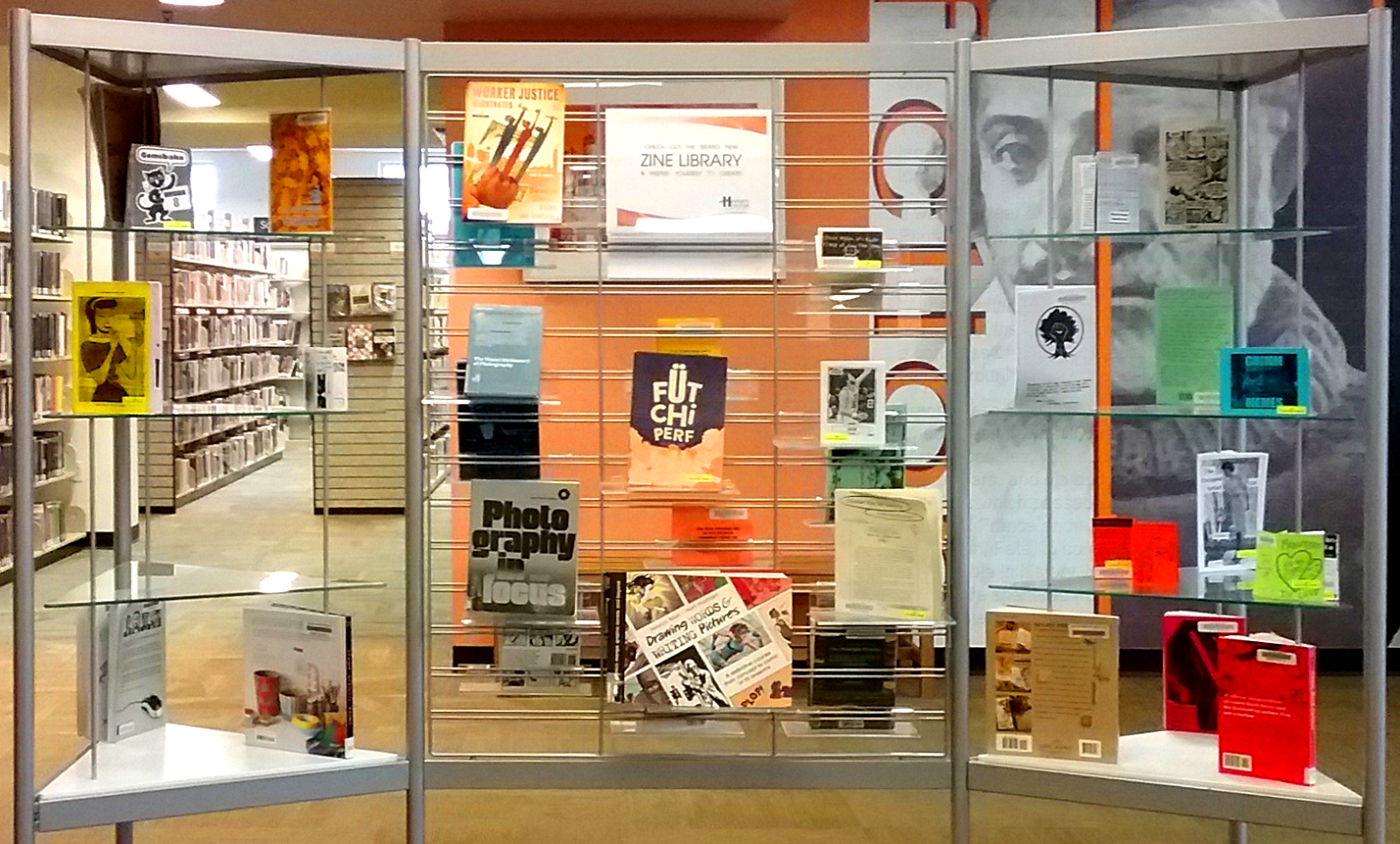
zine, [zeen] noun. 1. abbr. of fanzine; 2. any amateurly-published periodical. Oxford Reference

..

Showing posts with label Trading Stories w Leaves. Show all posts

Wednesday, April 30, 2008

Lazy Boy

via Trading Stories with the Leaves by Trading Stories on 4/21/08

Zine Cover - Lazy Boy

Mike Baker is a writer; a damn good one.

Lazy Boy is a collection of his stories, chronicling his sexual coming-of-age, but without descending to the level of mere pornography. His formative experiences, especially the awkward and ill-fated ones, are described with such passionate detail that it is impossible not to be drawn in.

Take this reaction to his rape by a boy called Bill:

I was cruel to never give him what he wanted, to tease him. That was wrong but I still hope he's dead and that he died of AIDS or that he was shot in the stomach.

There is anger, regret, self-doubt and self-righteousness in those two short sentences. That rawness and complexity of emotion is characteristic of Lazy Boy. The subject matter ranges from the bitterness of regret to the joy of youthful experimentation, but it's rarely one or the other. Mike is a complicated man, but he knows how to make sense of it on a page.

One thing that remains constant throughout the zine, is that it is hot:

… [T]here is nothing compared to seeing a regular man's naked body. It has a fullness to it. I mean to say, it is something I can have and it looks like me. I think very pretty people are their own species. Fucking them would be like fucking a dog or and [sic] bear or cousin. It would be wrong. And so these men undressed and red skinned from the hot shower's water and scrubbing themselves with their cocks only just getting thick and their balls hanging and warm were everything I wanted.

Lazy Boy is a blur of reminiscence and fantasy and self-analysis, and manages to get the balance right. There is more here than a blow-by-blow of a man's early sexual conquests — it asks the hows and whys, too, and that's why I'm sure every reader will relate to Mike's stories and learn from them.

Mike Baker, Lazy Boy, 1/4 size, 40 pages.
Available from PXS, Gimme Brains, Stranger Danger and the author.


Tuesday, April 29, 2008

Living Room #1

via Trading Stories with the Leaves by Trading Stories on 4/19/08

Zine Cover - Living Room #1

The premise behind Living Room #1 is simple: we are standing in the middle of a room, and with each page we learn more about it. By describing the things in the room, the author builds a picture not only of the place, but of the people who inhabit it:

There is a sewing machine in the middle of the room. It is a "Bernina Record". It stands on a wooden table with red legs and a nice varnished top. Also on the table is a big Cadbury Dairy Milk chocolate bar and piles of paper.

Each page describes a different part of the room, moving around it until we reach the door.

It is a brief zine, so there is not much more I can say without spoiling it. It is very matter-of-fact, at times just a list of objects: "Fridge. Chopping board. Grater." This contrasts with other passages that convey the author's judgment about the room's contents: "The pencils seem very important." In some ways this creates a peculiar unevenness, but it also creates in the reader the sensation of standing in the room and looking around, skimming quickly over some things and stopping to contemplate others.

I would very much like to read about other living rooms.

tracing_contact, Living Room #1, 1/4 size, 24 pages.
Available from Sticky.


Monday, April 21, 2008

Zine Review: La Boca #2


via Trading Stories with the Leaves by Trading Stories on 4/4/08

Zine - La Boca #2

E Parrott's second issue of La Boca is exciting from the get-go, before you even crack it open, thanks to a cleverly designed cover. Its bright brown card-stock is painted with white and pink blobs, which are made sensible only by the photograph printed on them by the copy machine.

This design sensibility and obvious mastery of the equipment shows through in the body of the zine, too. Photos have been manipulated through the photocopier to exaggerate light and shade. Grainy reproductions are given definition by hand-drawn lines; sometimes whole sections — a notebook here, a scarf there — are replaced by sketches.

The result is a striking clash of the real and the unreal. Parrott looks at the world and sees abstractions and ideas and feelings to which others are oblivious. She sees tenderness in a friend's actions, and fraternal connections between different Beatles albums. "everything has connotations."

I was fascinated by a passage in which Parrott imagines herself as a man:

listening to iron and wine I think of him–– 20-something, huge beard, mellow look on his face. and all the associations that go along with an image like that. yes, that's what i want. and, like i often do, i imagine myself looking exactly that way, forgetting for a second that i can't grow facial hair, or have masculine features at all, and that short hair says something different on a girl, that even that mellow look is different on a girl.

There follows a powerful discussion of gender identity. It's not a fully-fledged manifesto; there is anger there, but Parrott admits "i need to think more about it". The power of the section — just a couple of pages long — comes from this introverted caution. It conveys the author's real discomfort with being a woman: "sometimes … i notice the sound of my own female voice and wonder how anyone takes me seriously."

These thought-experiments give La Boca #2 great depth. By taking the real world but giving it a twist — whether by wondering what if the author was a man, or by reducing a photographed cat to a line-drawing — the reader is forced to look at things from a new, unexpected perspective. It is a sophisticated technique, and integrated just as effectually in Parrott's words as in her pictures.

La Boca #2 has an almost paranoiac awareness of the layers of possibility that exist around us:

we live on the edge of something, it scares me. who says things will happen as expected, things could just go out of control.

One day, hopefully, they will.

E Parrott, La Boca #2, 1/4 size, 48 pages.
Available from Loop.


Friday, November 30, 2007

Zine Review: Scam #5 1/2

Zine Review: Scam #5½

via Trading Stories with the Leaves by Trading Stories on 11/29/07

Arnold Zwicky wrote an interesting post for Language Log recently, about the blurred edges of technical and everyday words. He pointed out how "the common-language use of epicenter for the central point of an event" is slightly different from its original jargon meaning: "Technically, it's the location on the earth's surface over the place where the earthquake event happened, undergound."

When Erick Lyle named Scam #5½ "The Epicenter of Crime: The Hunt's Donuts Story", borrowing the phrase from a news broadcast, I suspect he was using epicenter in the common-language sense. But the technical meaning is perhaps even more fitting, because Hunt's Donuts — beneath the "OPEN 25 HOURS" neon sign — was the point where the underground centre was reflected on the surface. It was the place where the petty criminal underworld of San Francisco's Mission district met the world of the upstanding citizenry.

You can read part of the Hunt's Donuts story in a March 2000 article in the SF Weekly. By that time it was called Magic Donuts, and the city was trying to force the new owners to shut the place down, using their tactic of suing "Mom and Pop" store owners for social problems beyond their control. But if you want the full story, the real story of Hunt's Donuts on 20th and Mission, you need to read Scam #5½.

In Lyle's story, the Magic Donuts dispute is just the latest episode in a long history:

... the story of Hunt's is both less and more than news. Its a rumor, an illicit history, the pull of the gravity of the epicenter of crime. At 20th and Mission, battles to control the identity of the Mission have been acted out again and again, between ever changing sets of police and thieves over the years. In the story that follows we have the Irish cop who shut down the mission's Latino bars as his father shut down the city's gay bars. We have the young kid who couldn't beat the Hunt's sponsored team on the baseball diamond who grew up to try to shut down the shop as police captain. We have the Latino teenagers who hung out in front of Hunt's framed for a cop's murder in the famed trial of Los Siete de la Raza.

Hunt's Donuts was a microcosm of the Mission community, capturing both its successes and its failures, its hopes and its tragedies. Established by a pillar of the business community but condemned by the police, it was simultaneously a place where families would buy donuts after mass on Sunday and a place where drunks and junkies would trade goods of dubious provenance. In Scam #5½, Lyle brings the place alive on the page.

We see Hunt's through the eyes of its owners, its customers, the growing Latino population, the police — both sympathetic and otherwise, the drunks, the punks, and the yuppies moving in and gentrifying the Mission. Ultimately, Lyle is sad about Hunt's closing after 52 years as a Mission institution, and it is easy to see why: love it or loathe it, Hunt's Donuts was in the thick of things. Scam #5½ is a comprehensive social history and a pleasure to read.

Erick Lyle, Scam #5½, ¼ size, 32 pages.
Available from Paper Trail, Needles + Pens, McPheeters and Microcosm

Friday, November 16, 2007

Zine Review: No Better Voice #30

via Trading Stories with the Leaves by Trading Stories on 11/14/07

Zine cover - No Better Voice #30

In No Better Voice #30 Jami has opted to stand back and showcase her friends' work. She has pulled together a disparate collection of contributions; some are fictional, some are factual, and there is no apparent overarching theme.

The strongest piece is from Christina LaRose. It is the story of a young girl progressing through a ballet school, and it is a love-hate story. It is the story of an abusive relationship, of a culture that inflicts physical and mental pain but promises happiness: "a world of pain—a world of pain ensconsed in a smile".

I was drawn in by the first-person perspective (perhaps it is autobiographical?) and despite having no experience of ballet lessons I could nonetheless feel the horrible conformist pressure being put on the protagonist. Her body is the wrong shape, and she must be bound to eliminate unsightly curves:

When I get home, I pull the First Aid kit out of the medicine cabinet and roll ace bandages over my breasts, my waist, my hips. I am a shrinking creature, a mummy. I jokingly wrap a bandage over my face. Dad walks by and laughts.

"You've bandaged yourself out of existence!" he says.

I smile yes, yes, yes beneath the medicinal smell of the cloth covering my eyes.

While No Better Voice #30 is worth reading just for this story, there is plenty more to read. I also enjoyed Jenny Bloomer's "Shark attack!", a story about how wearing a dress turns her into prey at the bar, a target for sexual predators. It is evocatively illustrated by LB.

For something a little different, Shaun Allen has contributed a fascinating short history of the Revolutionary Union Movement in the US auto industry in the late 1960s and the 1970s. The movement was made up of several small union locals that challenged not only employers but also the tame-cat United Autoworkers, which had a poor record on including black workers in its leadership positions. Inspirational stuff, though the movement was short-lived. It's nice to see some history in a zine like this.

Jami Thompson (ed), No Better Voice #30, 1/4 size, 32 pages.
Split with Marked for Life #2. Available from Eye Candy, Stranger Danger and Paper Trail.


Friday, November 9, 2007

Zine Review: Marked for Life #2

via Trading Stories with the Leaves by Trading Stories on 11/6/07

Zine cover - Marked for Life #2

It's easy to see why Sage Adderley describes the tale of her young family's move to a new city as a "love story". She and her husband, Garrett, seem genuinely to have fallen head-over-heels for Philadelphia during a brief visit — less than a day — during a family holiday.

Their excitement is palpable from the outset:

We parked and got out of the car to let the girls stretch and we began being tourist. We walked away from center city and towards the more residential area. We saw multiple community gardens, sides of buildings covered with mosaic tiling and city parks filled with children. My husband and I fell in love. We looked at each other knowing that we could call Philadelphia home.

There begins an exciting adventure as the Adderleys tumble towards their new goal, crashing through obstacles like finding work and accommodation, transporting belongings, and settling their young daughters in a new town.

Sage's descriptions in Marked for Life #2 would make anyone want to live in Philadelphia. She sees a place of history and culture, with free concerts and community gardens, churches and bicycles and craft markets. Her daughters, Emily and Bella, have made new friends and enjoy visiting the Philadelphia Zoo, which Sage regards as "[t]he best zoo I have been to."

Love stories can be tedious if all we hear are the lovely things the besotted says about the object of their affection. A good love story recognises that there are two parties to a relationship, and gives us an insight into both. The real joy in reading Marked for Life #2 is in learning about Sage's ideas and hopes for her family. Her love for Philadelphia is not for its streets and buildings, but for its multicultural community and the opportunity it provides her children to learn and play and grow.

These issues were raised by Mike Kraus in A New Tomorrow #23, through his introspective consideration of the role of place in his life. Sage doesn't slow down much to reflect in the cautious way Mike does — she is too busy with home-schooling and concerts and family visits and proselytising Philadelphia — but the two zines sit very comfortably together, and I recommend reading both alongside each other.

My own plans to move to another city with my partner are still some months away, our train fares are paid, and we have signed on to start new jobs when we arrive; yet I still feel apprehensive about leaping into the unknown. It is very reassuring to read about a spur-of-the-moment intercity move that has been so successful, and that has made Sage and her family so happy. I will be keeping Marked for Life #2 near to hand to remind me that these ventures should be more exciting than scary.

Sage Adderley, Marked for Life #2, 1/4 size, 32 pages.
Split with No Better Voice #30. Available from Sage's own Eye Candy, as well as Stranger Danger and Paper Trail.

Zine Review: Skin Deep #2

via Trading Stories with the Leaves by Trading Stories on 11/6/07

The importance of zines to fascist organising is explained in White Noise:

Over the years an underground network of nazi skinhead magazines[,] "skinzines", had been constructed. ... With the politicisation that being in contact with other skinheads brought, it was common to find that an address over a period of time went through three stages: a skinzine address; contact for a skinhead crew; then finally a contact point for a fascist organisation.

Zine cover - Skin Deep #2

With that in mind, Deep Skin #2 is a must-read for anti-racist campaigners. It is a beautiful skinzine written by a violent racist... poet. Make no mistake, this is a serious bonehead: "Its for the dude who doesn't want to be a total gay if he is just trying to write some poems. So you can fuck off."

The zine is characterised by childish handwriting, naive sketches, bad spelling and a preoccupation with homosexuality. A sample:

Regret I had one time

knife
I am sorry I forgot you at home
knife
I am sorry you didnt get to party
knife/since dad that homo left you are
my best friend
knife
the block of concrete meant nothing
to me
knife

Like all good satire, Skin Deep #2 is effective because it is so accurate. Poems about "knife" and boots and being "too fucking tough / to have friends / or love" skewer the ultra-masculinity of the racist scene. And when the nazi twins are in the headlines, complaints about "weak" kids books are spot on: "my son doesn't need some fuzzy tiger teaching him how to be a fag".

I hope some real boneheads accidentally read this zine and see what utter morons they are.

Anonymous, Skin Deep #2, 1/4 size, 36 pages.
Available from Microcosm.


Tuesday, October 16, 2007

Zine Review: Mend My Dress #5

via Trading Stories with the Leaves by Trading Stories on 10/15/07

Zine cover - Mend My Dress #5

Subtitled "Girl love, girl revolution, stories of friendship", Mend My Dress #5 is a joyous memoir of childhood friends and crushes:

monkey bars. she smelled like watermelon shampoo and dirt. she had soft brown eyes and she could run way faster than me. she never showed off. i fell in love with her as hard as a second grade girl can.

There are stories about wanting to be sisters, fits of schoolyard jealousy, playing in the garden and just "loving our days together". There are stories about man pants and short hair, and thrift store adventures, and first kisses. It is impossible not to be swept up by the excitement in Neely's voice as she describes her friends and the good times they shared.

Occasional references to dark events (the subject of earlier issues) make Mend My Dress #5 all the more interesting: these are the girls that helped Neely get through an incredibly difficult period of her life.

I'm reluctant to use the phrase "coming of age", but it's hard to avoid, since the zine covers friends from pre-school through to high school. Each represents a new level of maturity, but without preachy introspection. It doesn't matter whether Neely's writing about holding hands in pre-school or going to punk shows in high school, you can remember those feelings.

It is a rollicking read that will make you think about your own childhood friends — you'll remember the stupid things you did together, and wonder what they're up to now.

Neely Bat Chestnut, Mend My Dress #5, 1/2 size, 20 pages.
Available from Eye Candy.


Tuesday, September 25, 2007

Zine Review: Bright Lights #2


via Trading Stories with the Leaves by Trading Stories on 9/23/07

Zine - Bright Lights #2

Bright Lights #2 is young without being naive. Sure, Katie writes about her PE class and her relationship with her mother, but it's not all angsty whining. These subjects are largely platforms for her thoughts on social class and the homeless.

So, for instance, Katie's complaint about PE is that "swinging around a racket in a stuffy tennis bubble makes me feel like a snob"; her arguments with her mother are political, about the causes of homelessness.

The second half of the zine is almost meditative, with some peaceful thoughts about rain and clouds:

One of my favourite things to do is just walk around aimlessly in the rain wearing a thick hooded sweater. I love to feel the rain collect on the bridge of my nose while I watch people hussle around like ants.

Me too!

Katie Joa, Bright Lights #2, 1/4 size, 20 pages.


Zine Review: 8LETTERS #1


via Trading Stories with the Leaves by Trading Stories on 9/23/07

Zine - 8LETTERS #1

I don't have a tattoo. I have thought about it, but since I'm not passionately committed to the idea, I'm sure I'll regret it later -- I picture Derek Vinyerd covering up the large swastika on his chest.

But not all tattoos can be covered up, and I've often wondered how their owners deal with their regrets. 8LETTERS is "a little book of knuckle tattoos", and it collects interviews Johnny NoPants conducted with strangers he met on his travels. He asks people what they have tattooed on their knuckles, why those eight letters are significant, and what the consequences of the tattoos have been.

There are flashes of humour, like Shawn showing his "FUCK NYPD" to the police, or this exchange with Kimya:

8- Do you ever wish you had different knucklers?

K- the only other ones that I though[t] would be fun, but I wouldn't rather have, would be Capri sun or juicebox.

8- I'm glad you got LAFF LOUD.

For many of the interviewees, the tattoos are an expression of defiance against the system. These people are making a statement that they don't want to fit in. As Kimya says, "I wouldn't work at a place that wouldn't let me have them".

Usually I enjoy this kind of screw-the-Man attitude, but in 8LETTERS #1 it's mostly just depressing. Zane tattooed himself while sitting in his high school class; two months later, he's already unhappy that "because of the exclamation marks, people cant really read it", and he's dropped out of school. Lil J had his done in prison, to remind him of his former life. Josh, too:

He told me how he went to prison, and got "25to Life" tattoed on his knuckles, but after getting released he wanted to remove them to "get a decent job." He couldn't afford to get them laser removed, so he tore them off himself with a razor blade and packed them in salt. This left him with scars in the shape of 25to Life.

None of this has brought me any closer to wanting a tattoo, but it was definitely an interesting read. I'd love to see a follow-up with some of the interview subjects, to see what they're doing and whether they still like their tattoos in another five to ten years. Unfortunately, their transient lifestyles -- as Lil J's knuckles put it, "HOBOCORE" -- mean that's highly unlikely. I'll just have to cross my fingers that things turn out okay for them.

Johnny NoPants, 8LETTERS #1, 1/4 size, 32 pages.
Available from Microcosm.


Zine Review: The Jaws of Life


via Trading Stories with the Leaves by Trading Stories on 9/13/07

Zine - The Jaws of Life

This brilliant mini-zine is a bizarre biography.

A first attempt was written about encounters with the yeti, but this was aborted due to typewriter difficulties. Instead, we are treated to a handwritten explanation of Gorbott's extraterrestrial origins. He writes:

i was transported to earth in some sort of space ship. i think something must have gone wrong in the cockpit, because i was dropped off in arlington, texas.

The illustrations were produced by "allowing my subconscious to dictate the movements of the pen rather than my critical conscious." I think this means he wasn't looking at the page while he drew, and the results are a series of slightly disconcerting but still recognisable portraits. The subjects do not bear any relation to the text, but somehow that seems to make more sense.

The Jaws of Life is very well executed. Gorbott's casual style and sense of humour avoid the potential pitfalls of silliness and pretentiousness. Instead, the zine is imaginative and playfully absurd, and it leaves the reader wishing it was longer.

The Gorbott, The Jaws of Life, 1/8 size, 12 pages.
Available from the author.


Zine Review: From the Desk of Business Chimp


via Trading Stories with the Leaves by Trading Stories on 9/13/07

Zine - From the Desk of Business Chimp

Sean Bieri's From the Desk of Business Chimp is a mini-comic comprising seven single-panel sketches of chimpanzees wearing suits in workaday situations.

Sounds a bit silly, but Bieri really captures the daily grind of office work. I can relate to every single page (well, except the one about smoking), and I think a scanned image of "Business Chimp regrets sending that last email" might come in handy.

From the Desk of Business Chimp is brief but entertaining, and worth picking up. I'm going to keep my eyes peeled for the sequel: Overtime for Business Chimp.

Sean Bieri, From the Desk of Business Chimp, 1/4 size, 8 pages.
Available from Microcosm.


Zine Review: Chainbreaker #4


via Trading Stories with the Leaves by Trading Stories on 9/12/07

Zine - Chainbreaker 4

Chainbreaker #4 is really badly organised -- or at least, my copy is. I should say this up front, because it got in the way of my jumping straight in to read it through.

It looks like there was a fight with the photocopier with no clear winner. Instructions for brake adjustments begin unintroduced with steps 4 to 6 on an upside-down page 15, before finishing with steps 1 to 3 on page 35. Worse still, some stories seem to be missing bits -- Moose's "Bike Nation" article seems to jump back a couple of pages, with at least a couple of sentences missing in the middle.

These frustrations aside, when I'd grappled with those layout issues enough to get properly stuck in to Chainbreaker #4, I found it was a vibrant, passionate and informative discussion about bikes, the people who ride them, and the problems of gender, capitalism and urban planning that confront them. The writing is truly inspiring:

[O]ne of the main reasons I love the bicycle so much is that you don't need a car to use it. I like the rides that begin and end at my back gate. The rides that take me through old familiar neighbourhoods, winding crazy loops that criss-cross the city and eventually, bring me back home again.

These contributors love their bikes, and they love their cities. Being out in the open air as they commute or courier or play gives them a stronger connection to the streets they move through. For Sean, a ride across town "brought back a rush of memories". Now that he lives too close to work to ride there, he thinks back to a bicycle commute and says "it made me feel alive." Scott Spitz describes similar feelings: "This is how I celebrate freedom."

But it's not all rosy all the time. Freedom comes with risks, like Moose's "broken teeth that I got from being nailed by a minivan on my bike" or "the cyclist that got killed in the French quarter last night". But these horror stories are taken as inspiration: for a documentary (One Shoe in the Road, about "struck riders and their stories"), or a bike conference, or a more inclusive town planning system. And there is plenty advice on keeping safe, including tips for riding in traffic, and instructions for maintaining your brakes.

Zines and bicycles are both low-tech in a high-tech world, and Chainbreaker #4 is a celebration of both. It's about getting stuck in with scissors and glue and bolts and grease. It makes me glad I own a bike -- and guilty that I don't ride often enough.

Shelley, Chainbreaker #4, 1/2 size, 48 pages.
Available from UrbanVelo, Microcosm and Paper Trail.


Zine Review: Notes to a Further Excuse...

via Trading Stories with the Leaves by Trading Stories on 8/23/07

Zine - Notes to a further excuse

Di's handsomely constructed zine, Notes to a further excuse..., is billed as being "about the experiences and adventures I had moving from Australia to England, where I now live". However, the bulk of it is made up of extracts from a tour diary, with brief and samey accounts of bus trips and art galleries and gigs and backpackers' hostels.

This was quite disappointing, mainly because of the missed opportunity. Di's style is friendly and open, and the non-diary portions are very engaging. Reflecting on her departure, Di writes:

The thirty minutes I spent before actually boarding the plane were some of the loneliest I've ever felt. I was really on my own, and there wasn't any turning back. By midnight, I was so exhausted and emotionally drained that it was actually kind of a relief to be sitting in my seat on the plane.

If the zine had continued in this way, readers would have had a very interesting insight into the pressures and excitements of leaving family and friends behind for an adventure on the other side of the world. Instead, it gives way to "At the Tate Britain I saw some Turner, some Freud, some Bacon and some Emin. It was pretty okay." Readers by and large don't need to know these little details, when there are far more interesting things going on.

The entry about the London tube bombings was much better. What does it feel like to be alone in a foreign city at the time of a major crisis?

It's one thing to watch news coverage from the safety of your home in Australia, and another to be near it, but still watching from safety. You still weren't there when it happened, so it doesn't feel real.

This section, along with a similar one about the people staying with Di in a Bristol backpackers, show how interesting Notes to a further excuse... could have been. A series of vignettes focussing on key people and events would be much more engaging than a list of bus rides taken and tourist traps visited.

There is a lot that could have been explored more fully. I want to know more about Di's meeting Adam than "I met [him] yesterday at the house show" in Southampton, and I want to know how their friendship grew over the next couple of months, to the point where they were willing to move in together.

A topic for another zine, perhaps?

Di, Notes to a Further Excuse..., 1/4 size, 40 pages.
Available from Di's Etsy shop.


Search This Blog